From Hollola to the world: rock-solid civil defence shelter know-how
29.4.2026
Rakennusbetoni ja Elementti Oy has never been content to make construction industry commodities. It has turned crises into growth and is now stepping onto global markets with specialist expertise.
Rakennusbetoni ja Elementti Oy’s focus reaches beyond simply weathering short-term cycles. At the heart of its success are a willingness to embrace new ideas and a drive to solve customers’ problems. Product development is not a separate department for ‘boffins’—it is the job of the whole organisation.
“For us, product development is part of every employee’s day-to-day work. It all starts with small things and with your own job,” says Sami Konsti, Sales and Development Director.
The company’s own innovations have created a product portfolio full of niche solutions. In particular, its civil defence shelter elements have become a spearhead. Where in-situ casting can take weeks, Rakennusbetoni’s precast solution can be completed in a matter of days.
With Rakennusbetoni’s products, it is not only about concrete.
“We don’t want to be just a supplier at the edge of the site. We offer end-to-end solutions that significantly speed up construction.”
In addition to shelter solutions, the range includes structural systems, lightweight aggregate partition wall elements, ready-made bathroom modules, paving stones, green roofs and EV charging point structures—an area that has grown into a strong and stable market.
From a storm-felled forest to a specialist in advanced concrete
Rakennusbetoni’s story begins in 1966, when the Maire storm felled large areas of forest in Kukonkoivu, Hollola. Olavi Kivistö recognised the value of the gravel beneath the trees.
At first, the business was traditional—gravel, ready-mix concrete and façade elements. The recession of the 1990s hit hard, and the company made a bold decision: it abandoned façade elements and chose the path of specialist concrete products.
“We started investing in product development and creating our own products instead of competing for the same high-volume projects as everyone else,” Konsti says.
The third-generation family entrepreneur believes that the same ability to renew is needed in today’s market as well. Now is the time to develop.
“This period forces companies to change. If you can’t develop, you’ll be out when the next upturn begins.”
The most important export is know-how
On Rakennusbetoni’s 70-hectare site there are now 22,000 square metres of production space, and the company employs around one hundred people.
A new phase is now under way: international expansion. The geopolitical situation has increased the importance of civil protection, and there is demand for Rakennusbetoni’s expertise. Discussions are currently taking place in the Baltics, Poland and Ukraine, as well as in the Middle East.
Concrete is heavy and expensive to transport—but that is not Rakennusbetoni’s strategy.
“There are plenty of concrete plants around the world, but civil defence shelter know-how is here. What we export is expertise. We don’t ship physical elements far away; instead, production is handled locally through subcontractors and licensing.”
Konsti emphasises the importance of focus in international expansion. The company culture generates new ideas continuously, but when going global you have to choose your battles. In this work, an external board and strong networks have been invaluable.
LADEC as a partner on the growth path
The journey from Hollola to international markets takes groundwork, but Rakennusbetoni has not walked the path alone. LADEC (Lahden Seudun Kehitys LADEC Oy) has supported the company and helped open the right doors.
“Through LADEC, we’ve taken part in different programmes and trips. We’ve gained a basic understanding and those critical first contacts,” Konsti says.
“You still need to do a lot of the legwork yourself. You can’t do everything on Teams—success requires face-to-face meetings.”
Konsti encourages other entrepreneurs to make use of the support available.
“Funding routes are also available through LADEC, Business Finland and the Economic Development Centres. You don’t have to do everything with your own money.”
LADEC's Business Development Manager Antti Suikkanen says Rakennusbetoni has done good work in renewing a family business.
“Alongside strong products, the current owners have brought in green values. Modularity enables efficient prefabrication and, as a result, fast production and quality assurance. That creates a real competitive advantage.”
In its target countries, Rakennusbetoni also advises on regulatory matters, because in many of them laws and standards related to civilian protection are still being developed.
“Finland is one of the leading countries in civilian protection. When you look at what is happening in the world right now, Rakennusbetoni could have a significant market gap to fill,” Suikkanen says.
Courage is an entrepreneur’s most important tool
In Hollola, major steps have also been taken in a business built on responsibility and the circular economy. In concrete, in addition to gravel and water, the key raw material is cement—and the cement industry is among the world’s largest climate emitters. In Hollola, the goal is to shrink the sector’s carbon footprint.
“Responsibility has always been at the core of our operations, not least because we operate on a valuable groundwater area. We are developing carbon capture and mineralisation in concrete, as well as solutions where demolished concrete is refined into a cement-like raw material.”
Trained as a civil engineer, Konsti has followed the family business’s development since he was a little boy. He has a message for Finnish companies considering international expansion: forget modesty.
“You need the courage to get started and take the first step. Many people have brilliant ideas that never leave the domestic market, even though they could create huge value elsewhere.”
---
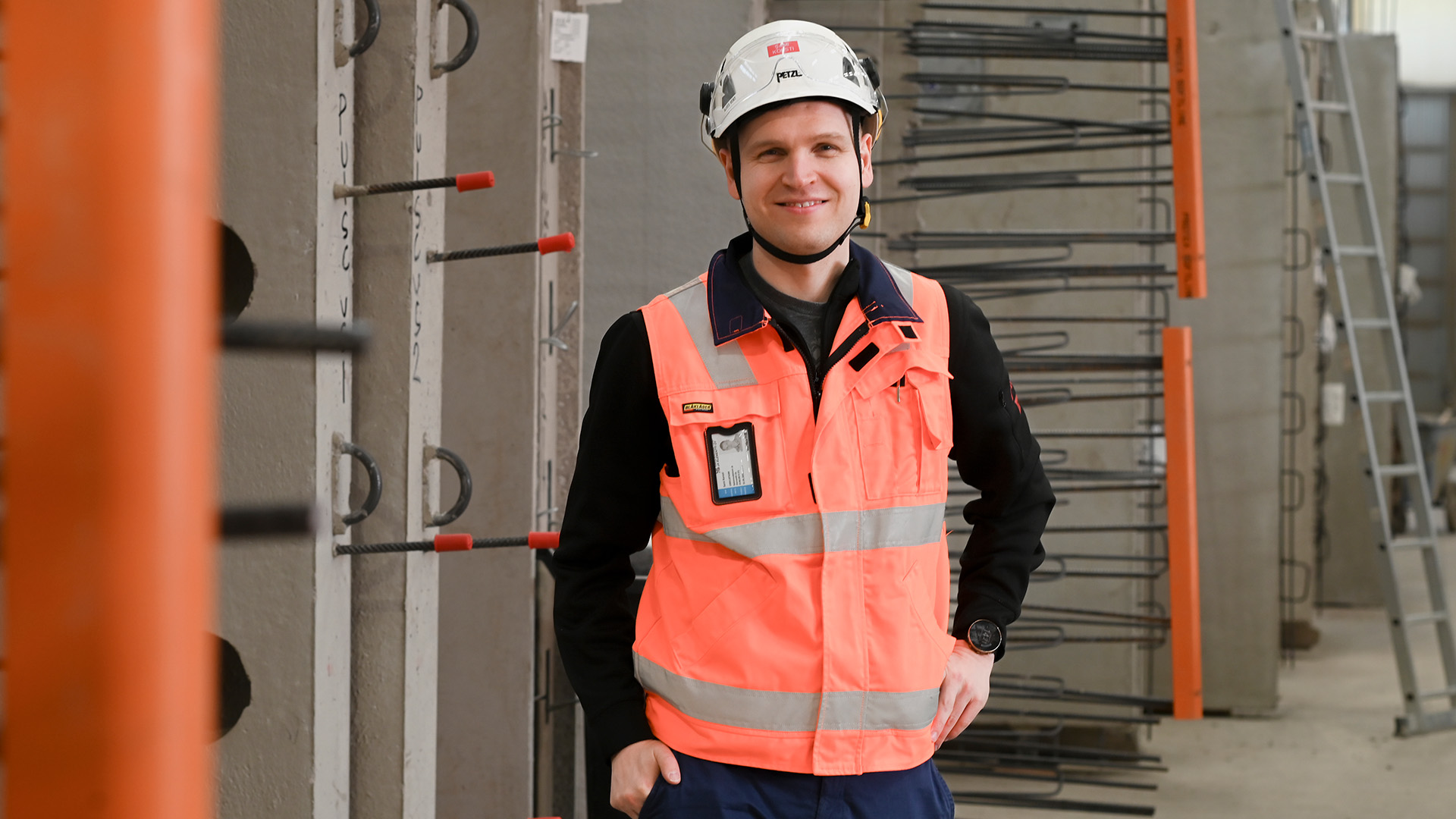
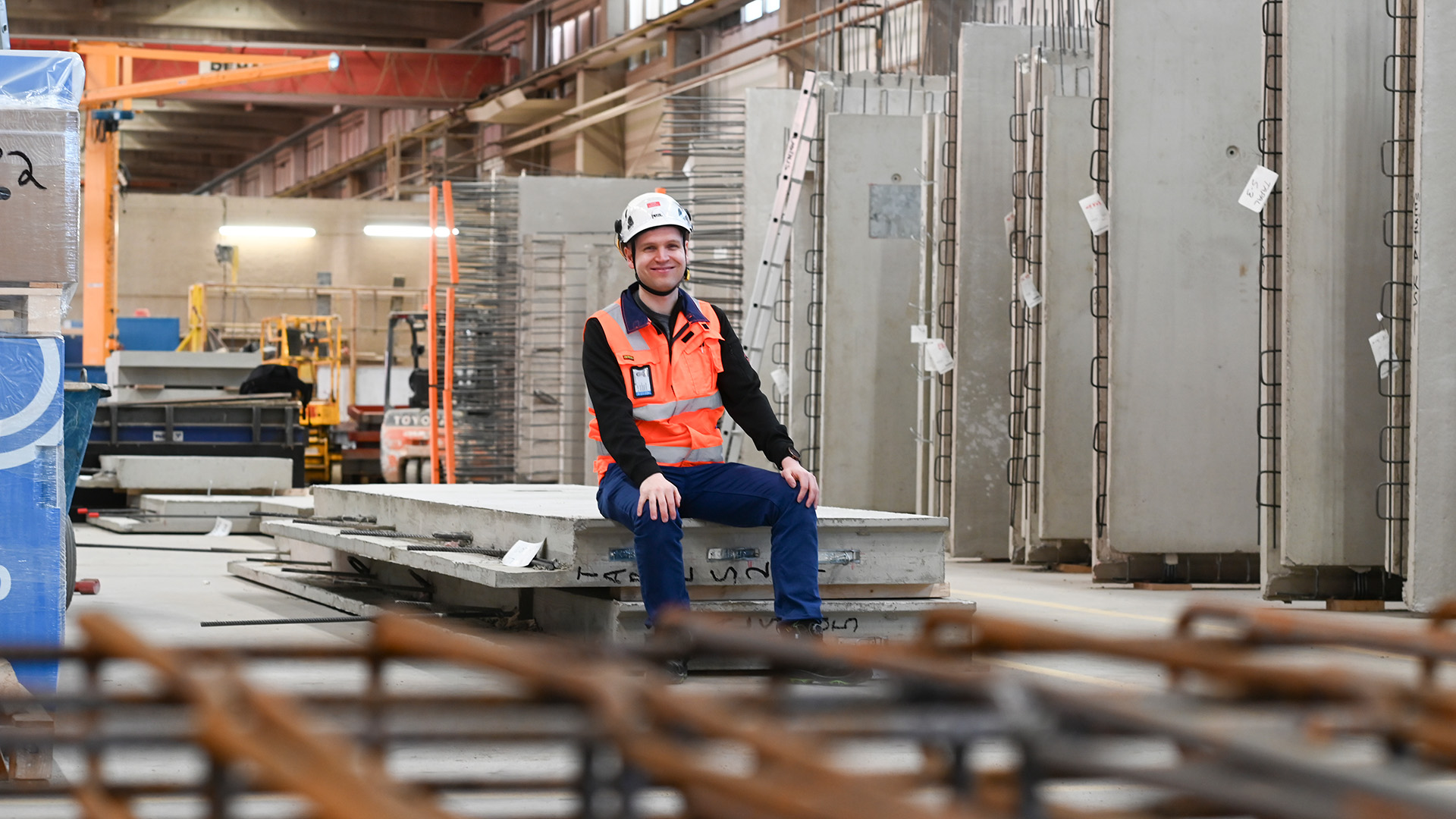
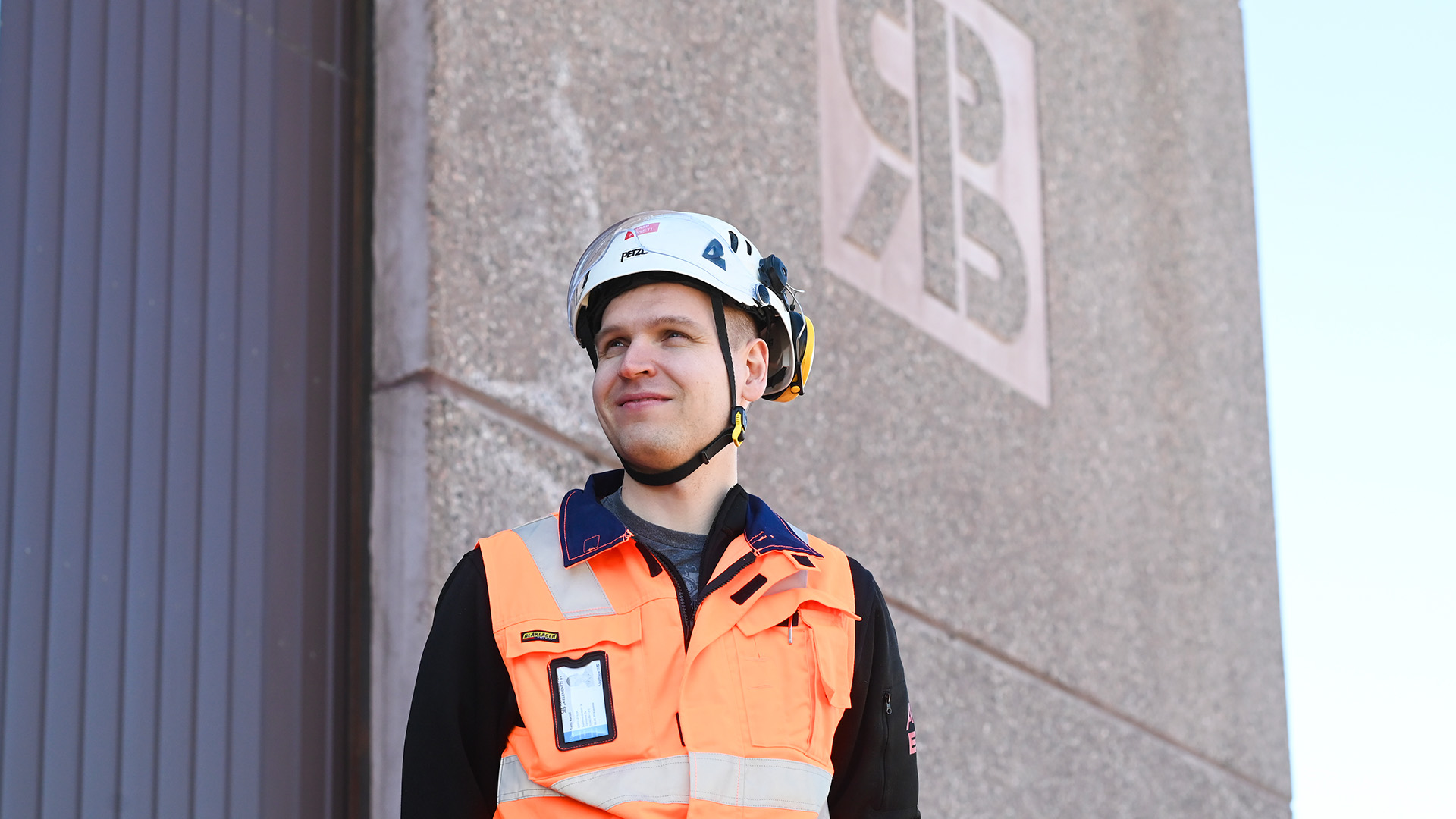
Text & photos: Sami Turunen | The photographs show Sami Konsti, Sales and Development Director at Rakennusbetoni ja Elementti Oy, at the company’s premises in Kukonkoivu, Hollola, in April 2026.
---
The article and photographs were produced as part of Lahden Seudun Kehitys LADEC Oy’s Kohti kansainvälistä kasvua -hanketta (Towards International Growth project), which is funded by the Renewing and Competent Finland 2021–2027 – EU Regional and Structural Policy Programme (ERDF), granted by the Regional Council of Päijät-Häme.